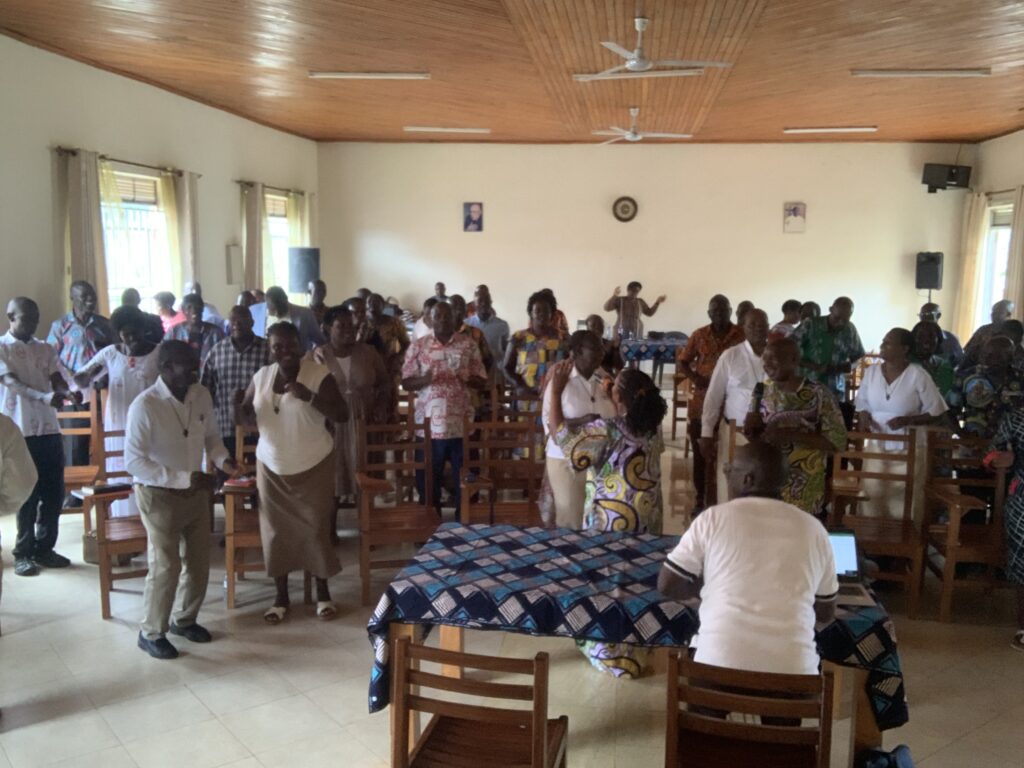
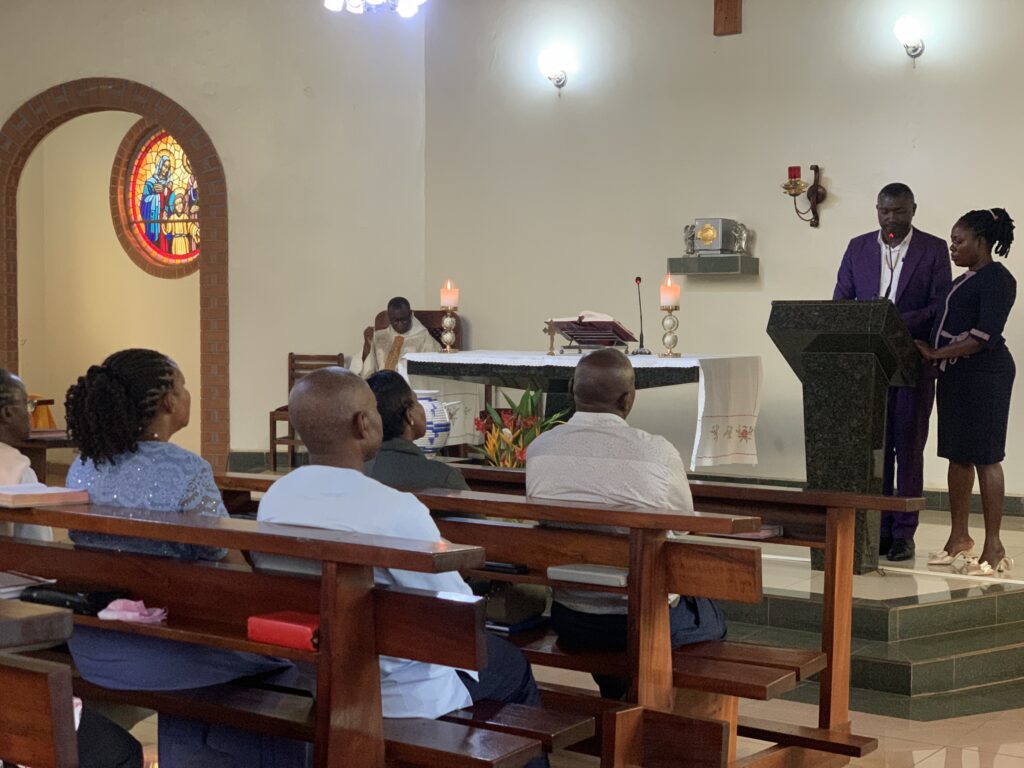
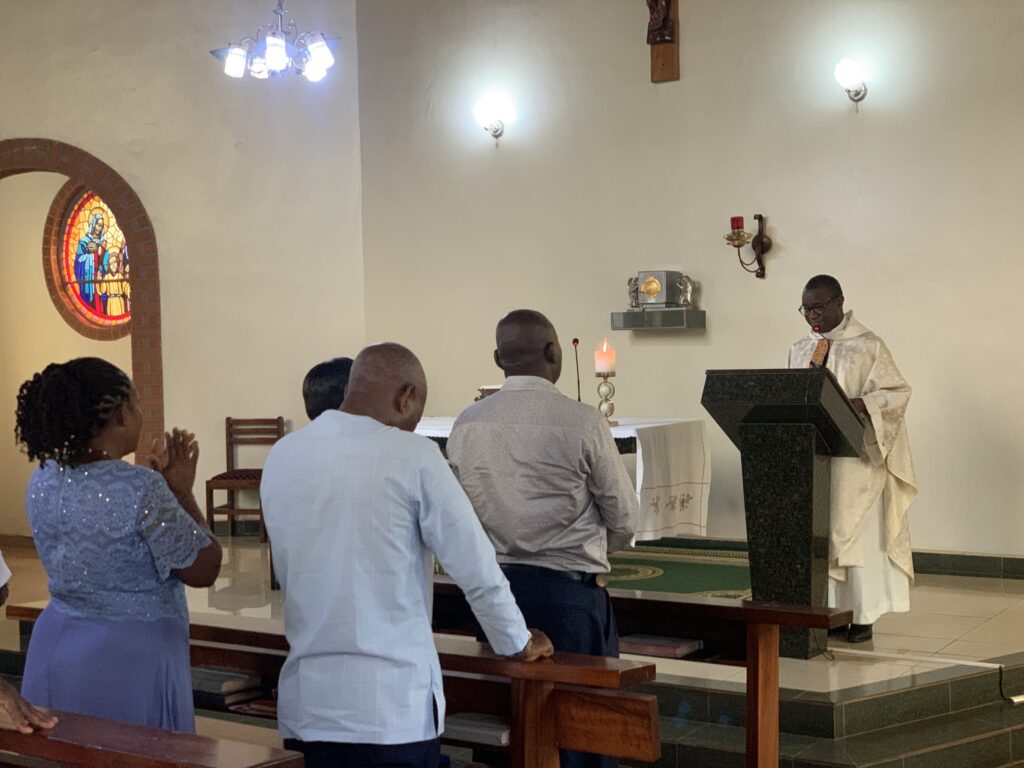
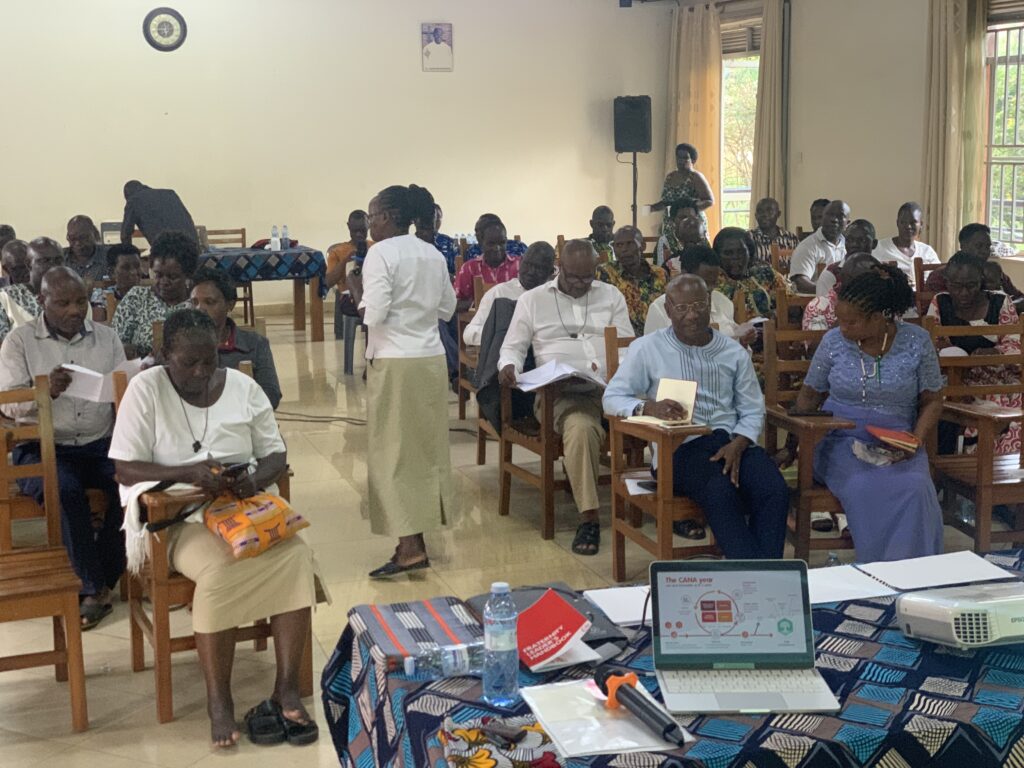
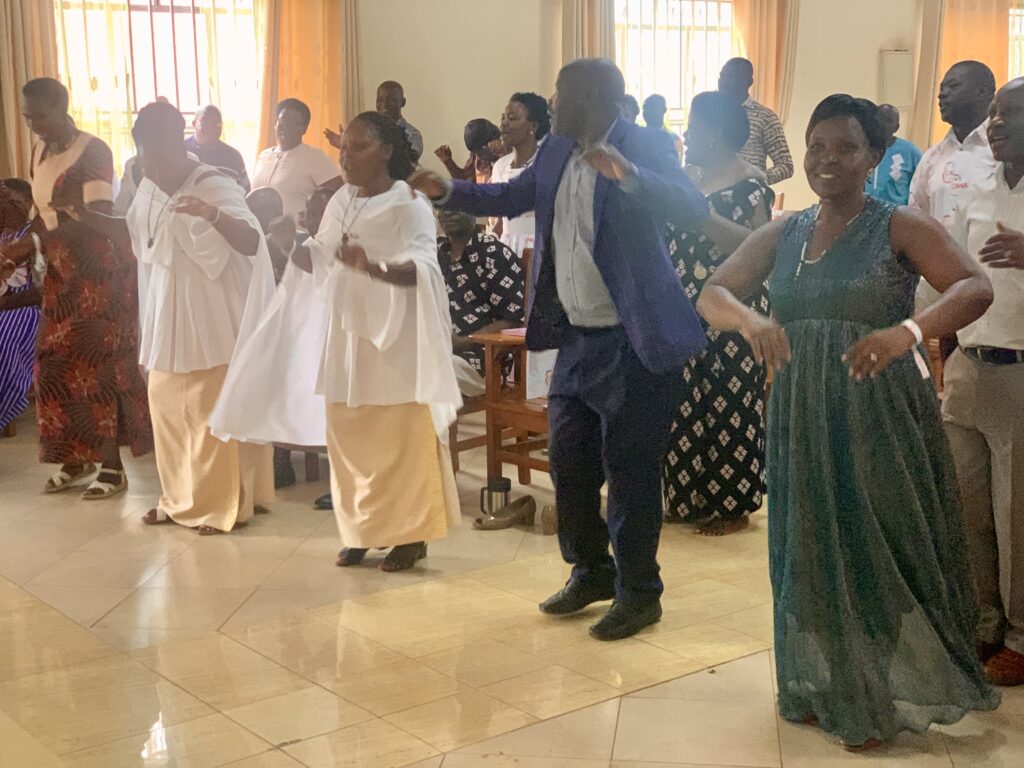
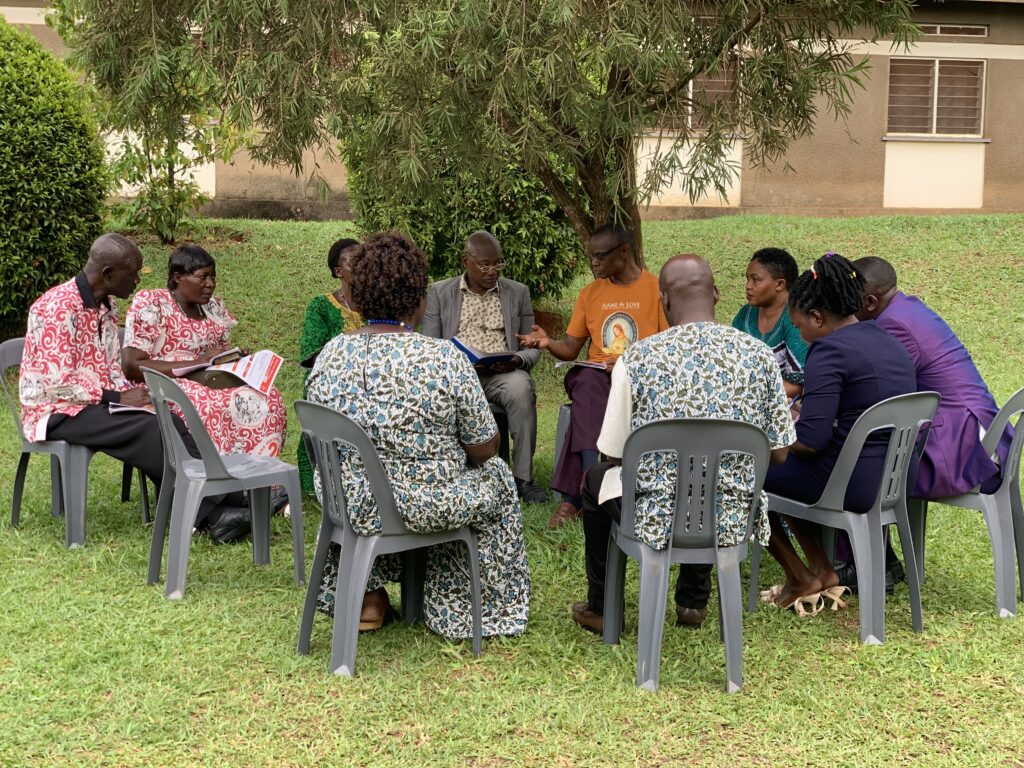
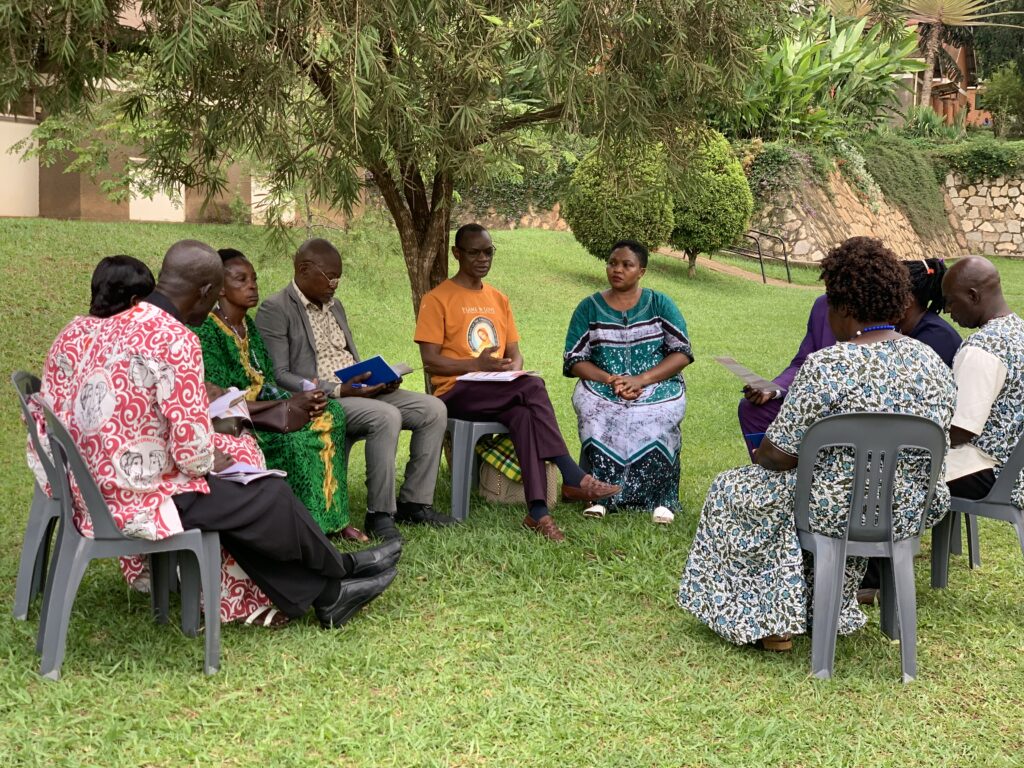
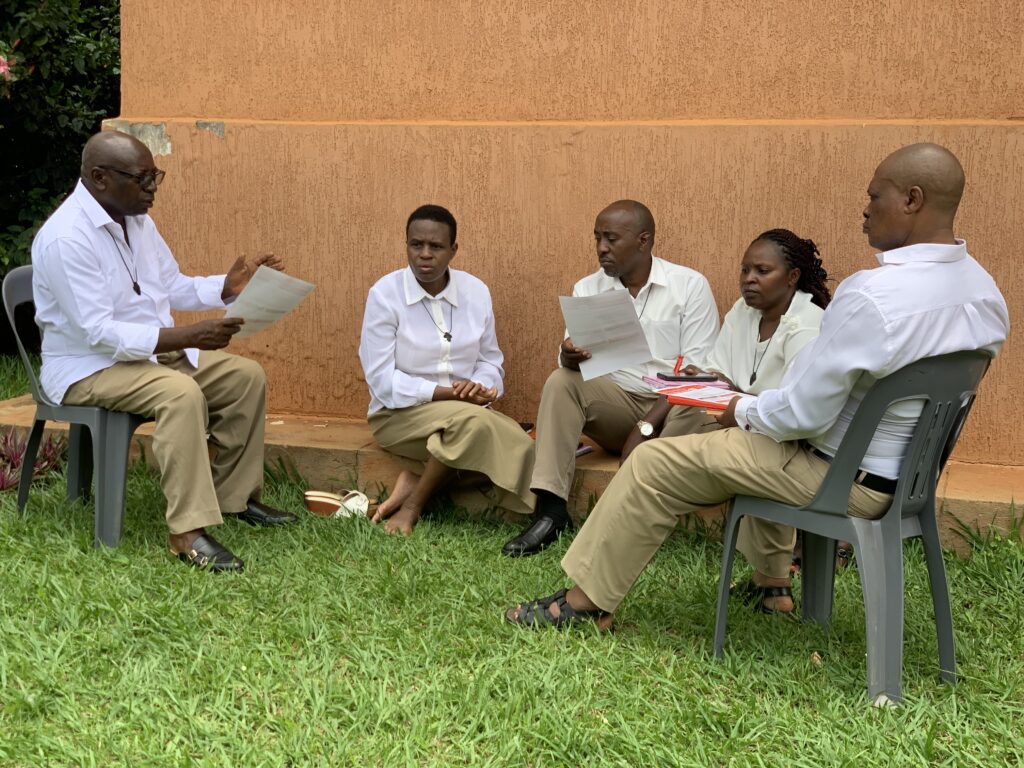
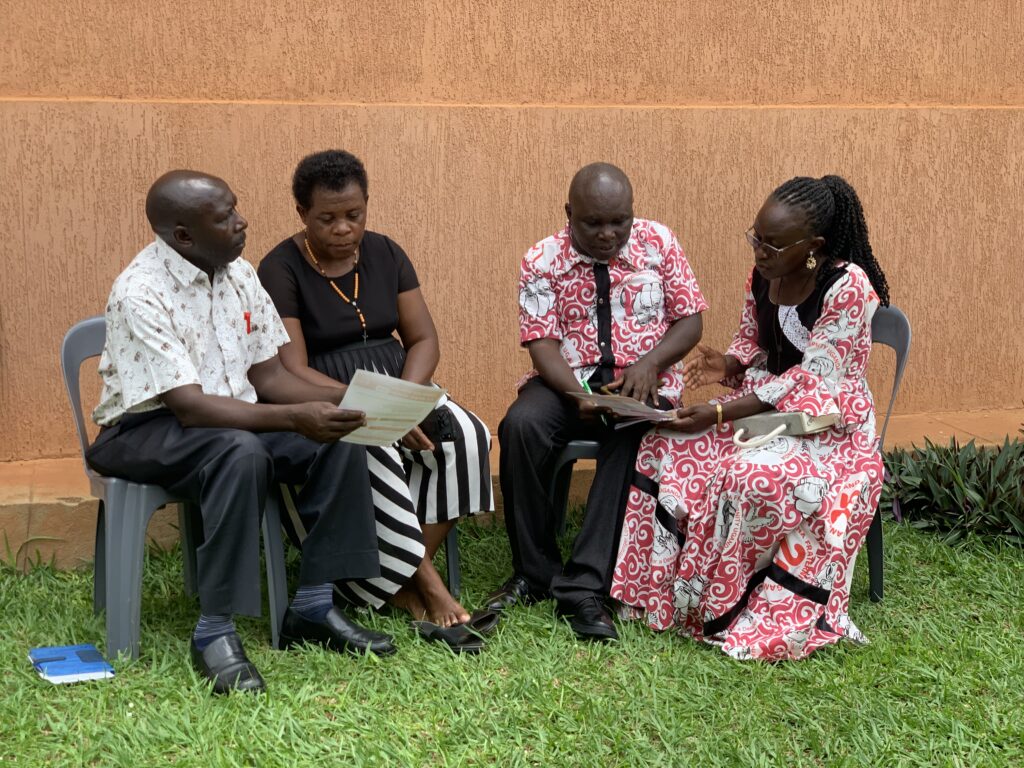
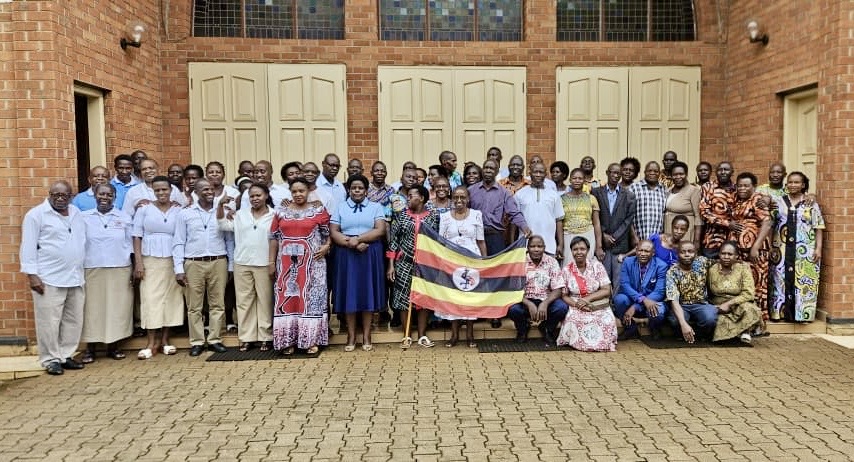
We held our four-day national meeting of CANA leaders at the Namugongo Charity Center in Kampala. What made this year unique was that we asked each diocese to send a new couple to lead their delegation. Two or three couples represented each diocese, which is a small number compared to the total number of leaders in each diocese: in fact, in 2026 there are 463 fraternities (i.e., 463 couples leading fraternities), 175 parishes (i.e., 175 CANA couples leading parishes), 12 dioceses (i.e., 12 diocesan teams with 4–5 leading couples each), and a national team of 5 couples—for a total of 646 couples in leadership roles! Next year, in 2027, we have decided to hold 2 or 3 regional meetings—bringing together several dioceses—instead of a national meeting. This will limit travel and allow a greater number of leadership couples to participate in this training.
After a time to settle in (a morning of silence with a teaching session, personal prayer, and time as a couple), we heard the 2026 report from the national team. Six years later, CANA has recovered from COVID. In 2020, we had 2,696 couples enrolled in the CANA Fraternity; 1,868 in 2021; and 2,258 in 2026. However, one area in need of significant improvement is the number of couples participating in a CANA retreat or a week of service compared to the number of couples enrolled in the CANA Fraternity. In 2026, out of 2,258 couples committed to the CANA Fraternity: 258 attended a CANA retreat, 276 participated in the CANA Fraternal life week, and 247 took part in the Martha & Mary program. Thus, 781 couples out of the 2,258 participated in a program that went beyond the standard CANA week—which remains a challenge for us.
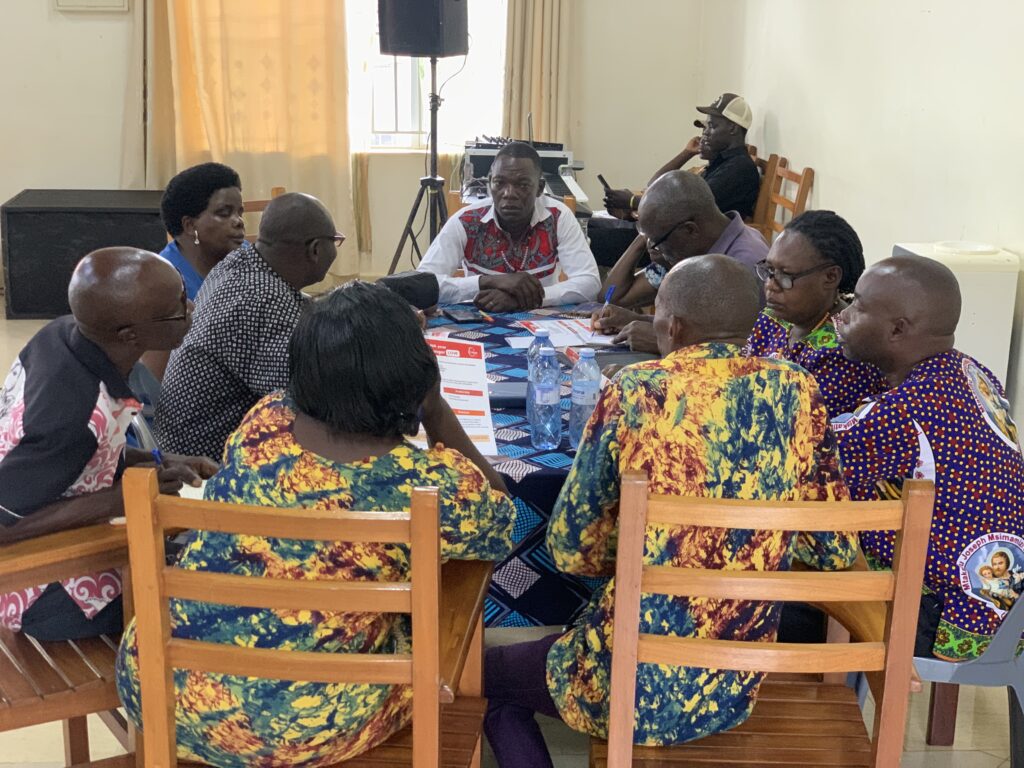
In light of all these challenges, we dedicated a full day to the CANA year. This allowed us to address the duration of commitment to CANA, the CANA mission, the mandates of leaders (including those in dioceses and parishes), the new handbook for fraternity leaders, and more. The day alternated between plenary sessions and working groups organized by diocese. The CANA year initiative was well understood, warmly received, and even unanimously approved by all the dioceses! The dioceses of Kampala and Mbarara added the Spiritual Exercises and the Community’s prayer groups to the list of possible commitments for CANA couples: the CANA year builds essential bridges between CANA and the Chemin Neuf Community.
Regarding terms of office, all leaders prayed and reflected to propose three names of couples who could replace them. We also had each couple fill out a form indicating the start date of their current term of service. We went through the same process within the national team (the four CANA couples began this ministry together 10 years ago), and we are now in a transition period until January 2027, when we hope to begin the year with a renewed national team.
The CANA year gives me great hope for Uganda and allows us to reevaluate the duration of the journey within the CANA mission, the role of interviews, the follow-up with couples, and the importance of missionary dynamism… It will undoubtedly take time to integrate this CANA year into the 12 dioceses, but I hope it will be an opportunity to prune the mission so that it bears even more fruit.