
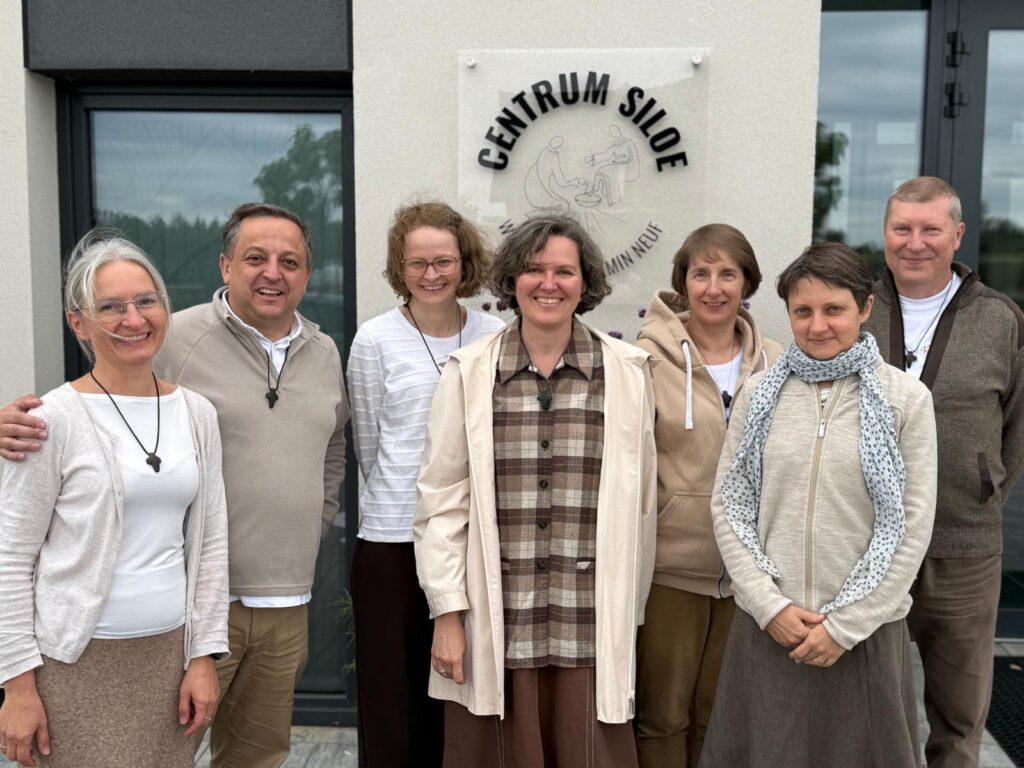
Since September, the Siloé mission has also taken root in Mistów, Poland. This new phase invites us to return to the roots of Siloé: to accompany others as they reflect on their lives in the light of Christ, so they may grow in freedom and respond to His call. Asia Sikorska, head of Siloé International, shares with us how this new chapter is leading the team to discern the steps ahead.
Since September, I have been living at the Siloé Center in Mistów (Poland)—the “little brother” of the Montagnieu Center—as the director of the Siloé mission in Poland and internationally. This is a major change for our mission: until now, its heart had always been in Montagnieu, and now we’re learning how to work remotely. I realize that to move forward—amid this experience of distance and the creation of this new center—we need to keep returning to the origins of our mission, its beginnings, and its initial insights.
“The Chemin Neuf Community has been leading life review retreats for a long time; while their format has evolved, their essence remains the same: biblical and Christ-centered. These retreats are part of a journey of following Christ. We are all called to follow in Christ’s footsteps in order to love and serve God. This journey can be made more or less difficult depending on our personal histories, certain events, or certain relationships. It can therefore be helpful to take the time to reflect on these experiences in the light of the Holy Spirit.”
This is how the Siloé (Anamnesis) retreat was defined by the team members and spiritual guides. This definition accurately captures the heart of Siloé’s mission. But Siloé is not just a retreat; it also encompasses the annual Siloé cycle, the Délié prayer training program, long-term stays in Montagnieu and Mistów, and the collaborative reflection efforts of spiritual guides and healthcare professionals.
In fact, the first *Anamnèse* arose from an initiative by Laurent Fabre (founder of the Chemin Neuf Community), based on the reflections of the brothers and sisters who led thirty-day retreats. They observed that some people found it difficult to respond to the Lord’s call, as if they were limping because of a stone in their shoe. In the second exercise of the first week of the thirty days, Saint Ignatius invites us to reflect on our lives in dialogue with the Word of God, to recognize that we are loved by God. Some people needed to spend more time on this reflection in order to embrace the story of their lives, including the painful parts. Returning, then, to the heart of Siloam, we can say that it is not a matter of healing for healing’s sake, but of receiving healing and liberation in order to follow Jesus and respond to his call with greater freedom.
At the time when the Community began offering the first Anamneses, there was a clear divide in French society between the spiritual and psychological perspectives on the nature of the person. It is therefore not surprising that our call for unity also resonated here, and very quickly, brothers and sisters from the Community and the Communion, as well as friends—spiritual guides, doctors, psychologists, and nurses—wanted to work and reflect together. This shared reflection and collaboration gave rise to several Siloé symposia, bringing together healthcare professionals, spiritual guides, and anyone interested in various topics (liberation, forgiveness, suffering, etc.).
From its very beginnings, Siloé has embraced the vision of the human person not as a mere combination of elements—body, psyche, and spirit—but as a bodily person created in the image of God for a relationship with oneself, with others, and with God. Within this framework, the spiritual dimension has always been—and remains—a priority. Siloé facilitators, even if they are therapists by profession, do not present themselves as such, but rather as spiritual guides. Psychological knowledge sheds light on understanding what a person is experiencing, the stages of life and the wounds associated with them, and the mechanisms that protect the person; however, a Siloé retreat (Anamnesis) is first and foremost a retreat—a time of spiritual reflection.
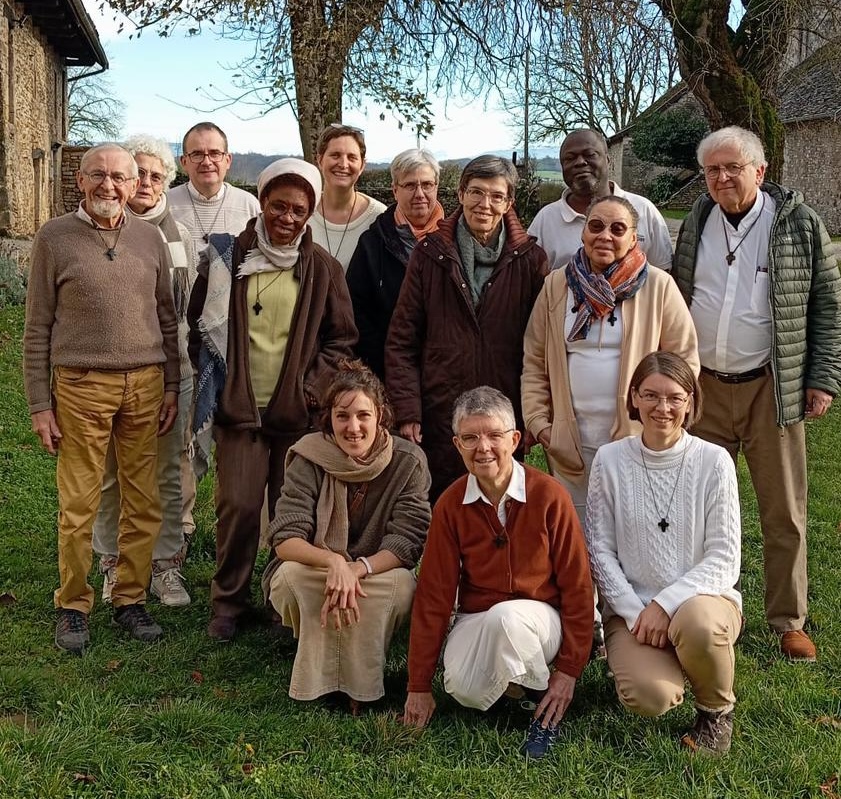
What’s next? Within this year’s Siloé international team, which is spread out across various locations—Mirjam in Montagnieu, Claudine in Tigery, Pierre-Louis in Bonn, and Asia in Mistów—we recognize the need to create spaces and ways to foster unity:
• Connecting Siloé teams around the world through training for spiritual mentors. This training also serves as a forum for sharing experiences and discussing questions.
• In linguistic work: indeed, the experience of translating the Siloé teachings into other languages encourages us to work on adapting the French version to the diversity of our Francophone cultures (primarily in Africa).
• By strengthening the bonds between Montagnieu, Mistów, and the entire international Siloé team, both in our unity of prayer for the mission and in our reflection. Today, a specific area of reflection is emerging: the role of the body in our perspective on psychological and spiritual unity. Rapid advances in neurobiology, biochemistry, and neuropsychology allow us to better understand our experiences, but also invite us to reflect on how our own bodies might lead us toward greater life and unity in our relationships with God, with ourselves, and with others.